


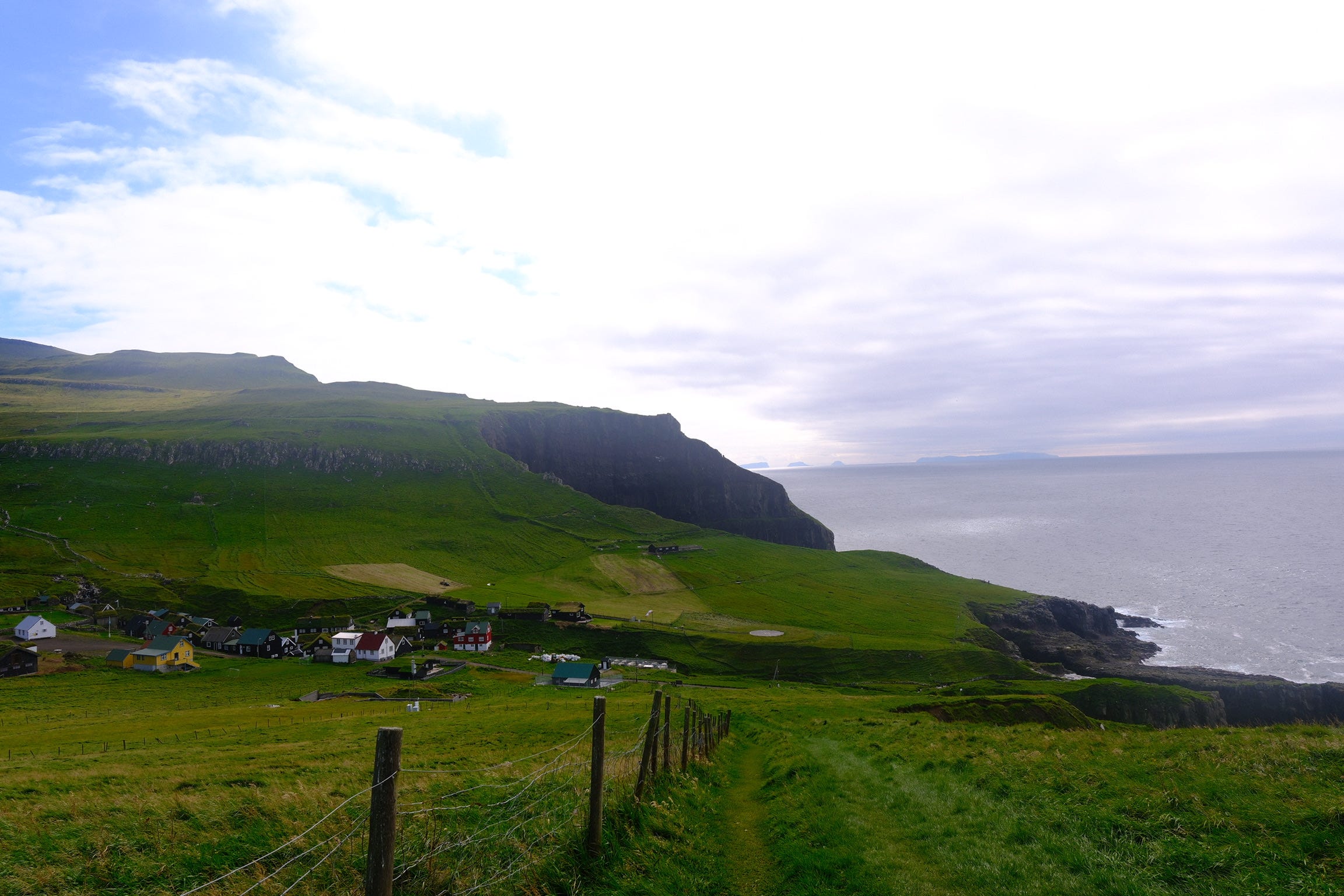
MYKINES, Faroe Islands — It was no later than ten o’clock in the morning. The churn of the sea was still in my stomach and we had just climbed a steep stone staircase from the fjord below. A speedboat had ferried us—rather, it all but flew through the wind over the choppy seas—to Mykines, among the outermost of the islands in the Faroese archipelago.
Groups of other tourists, not quite throngs but not quite a trickle either, stood in the town square and sipped coffee as we waited for the village-sponsored tour to begin.
“We couldn’t even get a beer,” one of my traveling companions mentioned to a local about our age, who ended up being the tour guide.
“Yes,” she replied. “My grandmother owns that restaurant. There are too many alcoholics here, so she doesn’t serve beer until the afternoon.”
I have found Nordic people to tell it like it is. Substance abuse in frigid, remote places like Mykines is, after all, a well-trodden path. With little else to do in the cold darkness of the winter months, people turn to the warmth of drink.
“Even if you aren’t an alcoholic,” I countered. “It is ten in the morning.”
“Buzzkill,” my friend replied.
With the help of Heðin Brú’s classic Faroese novel “The Old Man and His Sons”, I had been trying to recreate the Faroes of yesteryear in my imagination. During the harsh winter, an island like Mykines, for example, would have been cut off from the rest of the archipelago—not to mention the rest of the world—for months on end.
These days, the Faroes are so interconnected, so technologically advanced that it is hard to imagine such a time. A vast network of underwater tunnels connects islands, even those whose population numbers just a couple dozen, to cities (well, towns) like Klaksvik and Torshavn.
From the top of the mountain that lay just beyond Mykines, I looked down at the village and traced its quiet dirt alleys and babbling brooks in my mind. If only I had been born here, I thought, I could sit at a window and read and write and stare at the sea …
Except Brú’s book, a short but arresting account of nineteenth- and early twentieth-century life in the Faroes, does not speak of any such ease. Instead, the seafaring Faroese sailed up massive swells and past piercing rocks in search of shelter and sustenance. Things were intensely seasonal: the rush to stock up in the cool summer months, the desperation of provisions running low as the high winter winds whistled outside.
I shivered as the thought of such a life grounded me once again in reality. In the morning breeze, hundreds of puffins flew high into the air then turned sharply, a rapid descent back to ancestral perches in the swells of grass on the cliff. We, too, descended, though not down a cliff but back to Mykines town, where the restaurant’s beer-trading hours had begun.
🇫🇴 Read more from the Faroe Islands.