


COLOMBO, Sri Lanka — The rain splashed down on our umbrella-less heads and up our uncovered legs from ankle-deep puddles. We traced the periphery of Pettah Market, a sprawling network of shops and cart vendors peddling everything from backpacks and watches to produce and beauty products. I felt like I had been teleported back to Colobane Market in Dakar, which I never came to love or even like.
Still, I felt invigorated as we weaved through traffic and over puddles to pop into various shops. Marketgoers were eager to make conversation, though some of the time it turned out to be tour guides with a delayed pitch strategy. I picked up a novel, conveniently titled Colombo, and will report back after a long train ride tomorrow.
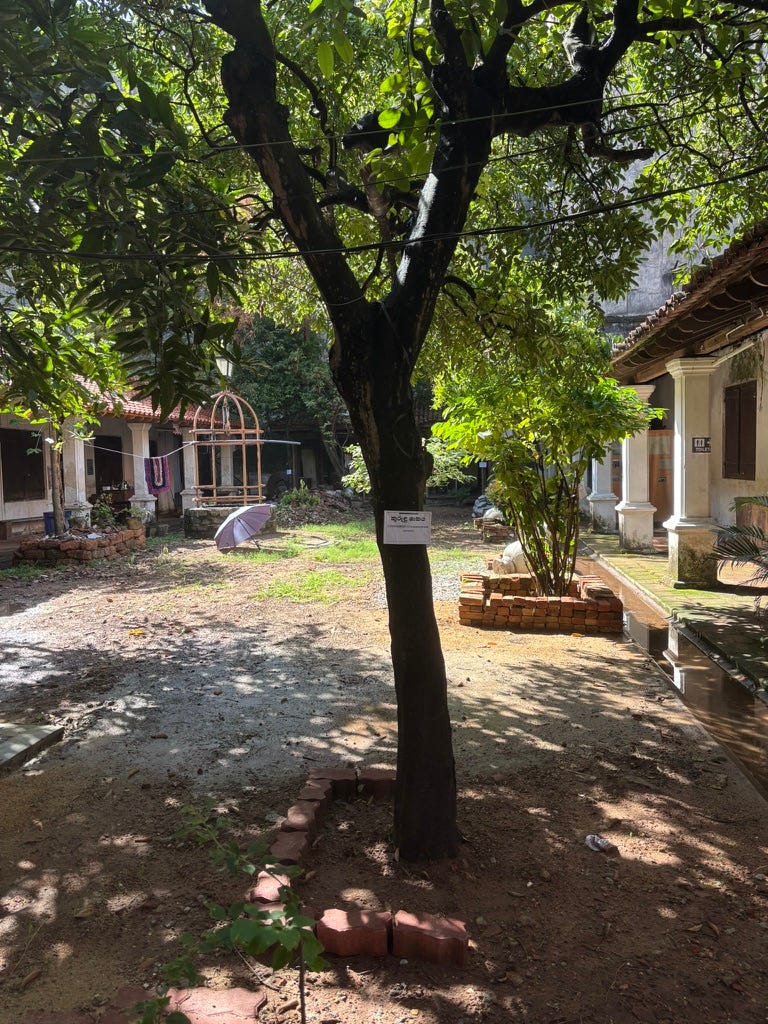
The purpose of our visit to Pettah Market was not to get lost in its labryinth, but to visit the Dutch House, which sounds like an Ann Patchett novel but is really a former colonial quarters that have been converted into a museum about the century of Dutch rule in Sri Lanka. The stately home, situated right next to electronics stores and clothing boutiques, is right in the middle of Pettah Market’s chaos and bustle.
The two-story building is full of exhibits about Dutch forts, furniture, and governance in Sri Lanka. Some were quite interesting, others almost unfathomably boring. As it turns out, many of the Dutch forts on the island were originally Portuguese constructions that were given a facelift by the Dutch after their arrival. You don’t need fifteen wall plaques and fort blueprints to get the idea, but they’re there if you want them—for something more lively, step outside and back into the twenty-first century.
🇱🇰 Read more from Sri Lanka.